
Does your horse have trouble bending in one direction? 🐴👇 Read description
Up Next
8 videos
GO RANCHING TODAY WITH LIBBY & HER HERD 🐎🐎🐎🐎 #streamhorsetv #horses #ranching #herd #animals #shorts
January 29th, 2022

IYKYK 🐴❤️
September 24th, 2024

Weekly sometimes daily peptalk 😅
November 13th, 2024
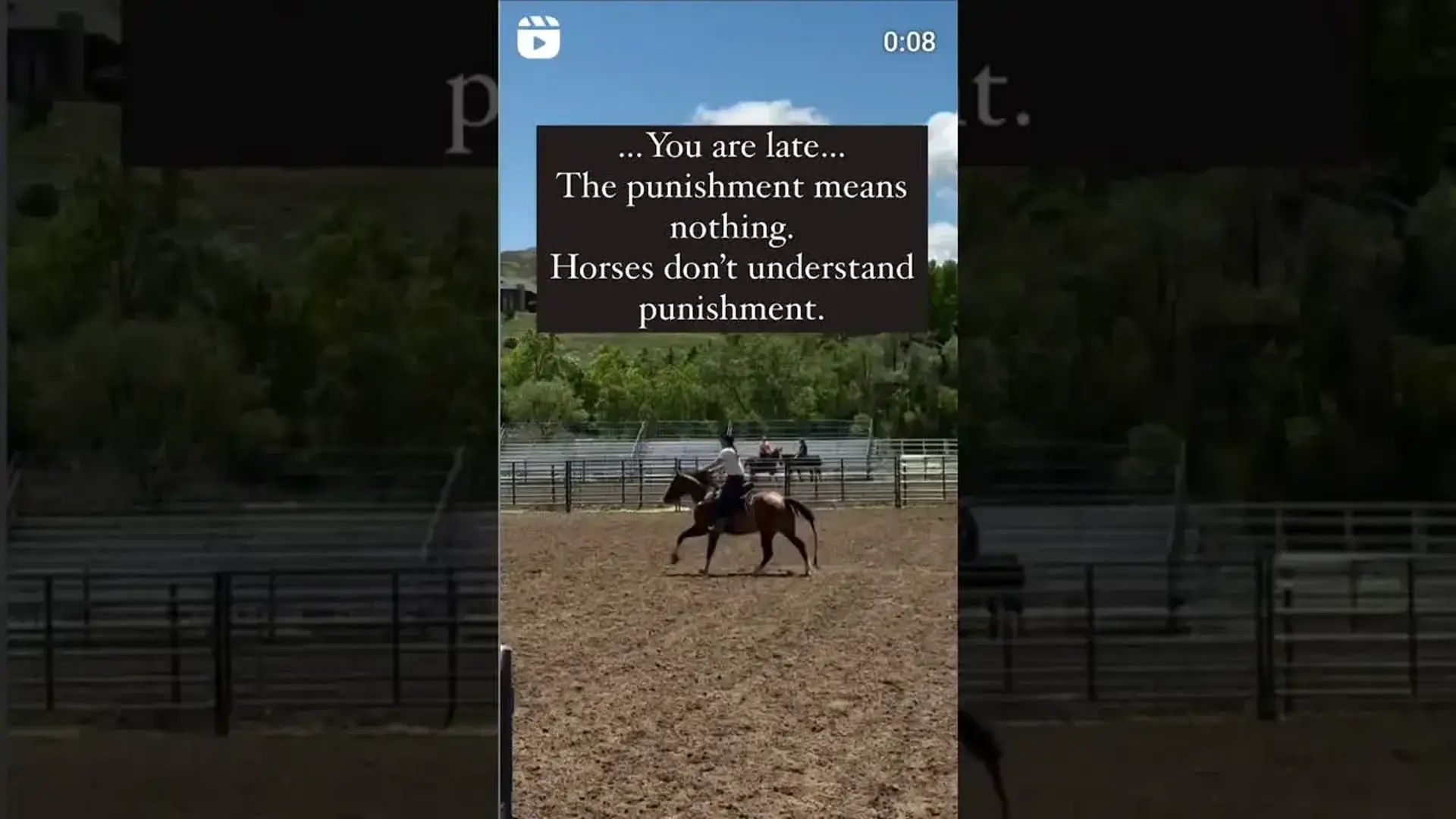
Horses don’t understand punishment. If you have to “punish” your horse YOU WERE LATE!
January 5th, 2025
After all the flights, countries, and adventures… this is the place I always come back to. ✨
June 19th, 2025
because I want to 👏 if it makes you happy, it ain’t NOBODIES BUSINESS 💃🐴
June 21st, 2025

NYC Carriage Crash, Rider Felony Burglary & Tiny Horse Thrives 🐴🌎💥
May 19th, 2026
People often ask me: But why did you get a mini pony? You can't ride it anyway...
August 6th, 2026
If so, they could be experiencing upper cervical dysfunction. What do we mean when we say an upper cervical adjustment or that the horse is experiencing upper cervical dysfunction? The cervical spine is the part of the spinal column (backbone) known as the neck. The cervical spine is composed of seven bones (C1 – C7), which are separated from one another by intervertebral discs. These discs allow the spine to move freely and act as shock absorbers during activity. At each vertebral level in the cervical spine, a pair of nerves exit through small openings called the intervertebral foramen. These nerves control the motor function and sensation to muscles, skin, and tissues in the body. If you have ever experienced a “pinched nerve” the intervertebral foramen is the area of the spine that the “pinching” occurs. Just like with human’s horses can experience a “pinched nerve” and other similar neck problems, including pain, stiffness, decreased range of motion, headaches, and muscle spasm. The upper cervical spine, specifically, is the top vertebrae of the spine. It is made up of the atlas (C1) and the axis (C2). These vertebrae are atypical and are different in shape and function from the rest of the cervical vertebrae. The different shapes of these vertebrae allow for different ranges of motion, which is the reason an upper cervical adjustment looks different from a normal cervical adjustment. The primary motion of the atlanto-occipital joint (C0 – C1) is lateral flexion, and the secondary motion is flexion/extension. While the primary motion of the atlanto-axial joint (C1 – C2) is rotation, and the secondary motion is flexion/extension. Knowing the directions of movement of a specific joint allows a chiropractor to isolate that joint and provide a specific adjustment. If we notice that a horse is struggling to bend in their upper neck, we want to focus on assessing the movement of C0-C1. If you have been told that your horse has an issue in its upper cervical spine, now you know where the problem is, and we can work with specific exercises and mobilizations to correct the problem! Follow along if you would like to learn more! 🥰🎥 @peakperformanceintl #chiropractic #chiropractor #horses #muscles #bones #spine #tissue #athlete #performance #sports #equestrian #equine #workout #animals #doctor #horse #cheval #caballo #cavalos #adjustment