
What do we mean when we say the horse is experiencing upper cervical dysfunction? 👇👇
Up Next
8 videos
Sometimes a soulmate and best friend can be found in a horse 💙🐎🐎
July 5th, 2024

🎄✨ Spreading Holiday Cheer at Cox Media Group! ✨🐴
December 23rd, 2024
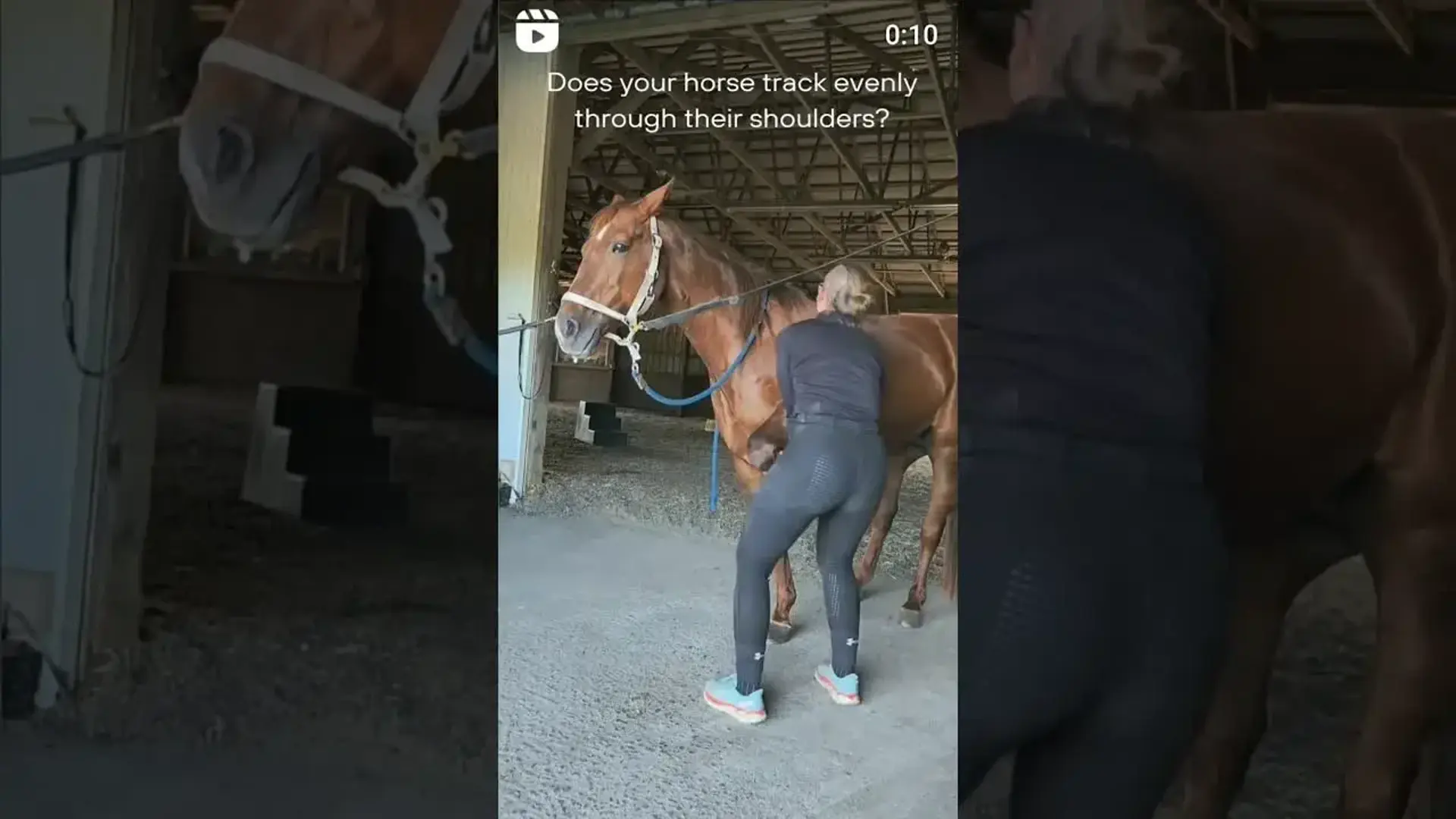
Is your horse tracking evenly through their shoulders? Read more 👇
January 5th, 2025

Let go and let God ✨
January 23rd, 2025
All the strength training from now until my next surgery 🙃💪
April 22nd, 2025
Throwing it back to the days before Brendan left us for school!
September 3rd, 2025
Sei mai stato libero?
September 8th, 2025

Merry Christmas & Happy Holidays from our friends & family to yours! ❤️🎄🐎❤️💙
December 24th, 2025
What do we mean when we say an upper cervical adjustment or that the horse is experiencing upper cervical dysfunction? The cervical spine is the part of the spinal column (backbone) known as the neck. The cervical spine is composed of seven bones (C1 – C7), which are separated from one another by intervertebral discs. These discs allow the spine to move freely and act as shock absorbers during activity. At each vertebral level in the cervical spinal, a pair of nerves exit through small openings called the intervertebral foramen. These nerves control the motor function and sensation to muscles, skin, and tissues in the body. If you have ever experienced a “pinched nerve” the intervertebral foramen is the area of the spine where the “pinching” occurs. Just like with human’s horses can experience a “pinched nerve” and other similar neck problems, including pain, stiffness, decreased range of motion, headaches, and muscle spasm. The upper cervical spine, specifically, is the top vertebrae of the spine. It is made up of the atlas (C1) and the axis (C2). These vertebrae are atypical and are different in shape and function from the rest of the cervical vertebrae. The different shapes of these vertebrae allow for different ranges of motion, which is the reason an upper cervical adjustment looks different from a normal cervical adjustment. The primary motion of the atlanto-occipital joint (C0 – C1) is lateral flexion, and the secondary motion is flexion/extension. While the primary motion of the atlanto-axial joint (C1 – C2) is rotation, and the secondary motion is flexion/extension. Knowing the directions of movement of a specific joint allows a chiropractor to isolate that joint and provide a specific adjustment. If you have been told that your horse has an issue in its upper cervical spine, now you know where the problem is, and we can work with specific exercises and mobilizations to correct the problem! Follow along if you would like to learn more! 🥰🎥 @peakperformanceintl #chiropractic #chiropractor #performance #bones #muscles #adjustment #animals #horses #equestrian #equine #pony #doctor